Regaining Mobility: Why an Electric Sit to Stand Lift Transforms Patient Care
Isabella Mendoza Posted on
The simple act of standing is something many take for granted. For patients recovering from surgery, living with progressive illness, or dealing with age-related weakness, this motion can become a daily struggle fraught with risk. Manual transfers place immense strain on both the patient and the caregiver, often leading to injury or a loss of dignity. The electric sit to stand lift has emerged as a vital piece of equipment that bridges the gap between complete dependence and independent mobility, offering a safe, efficient, and empowering solution for those who can bear some weight but lack the full strength to rise unaided. These devices are not just mechanical aids; they are tools that restore confidence and autonomy.
Understanding the Value of an Electric Sit to Stand Lift for Daily Care
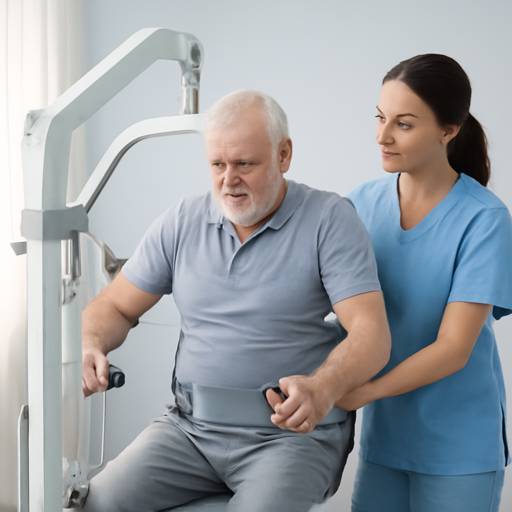
An electric sit to stand lift is fundamentally different from a full-body sling lift. It is specifically designed for patients who have some weight-bearing capacity and upper body strength. The process is intuitive: the patient sits on a small padded sling or a contoured seat, places their feet on a stable platform, and holds onto handles or a support bar. As the lift is activated electrically, it gently tilts the patient forward and upward into a standing position. This action mimics the body’s natural standing mechanics, using the patient's own leg muscles to complete the transfer. The value here is twofold. First, it encourages active participation in the transfer process, which is critical for maintaining muscle tone and cardiovascular health. Second, it dramatically reduces the physical toll on the caregiver. Instead of awkwardly pulling a patient up from a chair, a single assistant can guide the lift smoothly, preventing awkward twisting and heavy lifting that commonly cause back injuries.
The psychological impact cannot be overstated. Many patients feel a profound sense of helplessness when they must be hoisted in a full-body sling. An electric sit to stand lift allows them to be an active participant rather than a passive load. This can lead to better cooperation during therapy sessions and a more positive outlook on recovery. Furthermore, these lifts are exceptionally versatile. They are used for transferring a patient from bed to wheelchair, from wheelchair to toilet, or from a chair to a commode. This versatility makes the device a cornerstone of daily care routines in both institutional settings like nursing homes and in private residences. Battery-powered options further enhance this utility, allowing the lift to be moved between rooms without being tethered to a wall outlet, providing freedom that manual lifts simply cannot match.
Key Features and Mechanical Design of Modern Devices
When evaluating modern equipment, the mechanical design is the primary differentiator between a frustrating tool and a reliable partner in care. The foundation is the base, which is typically wide and equipped with lockable casters. This wide stance ensures stability during the rising motion, preventing tipping. Many models feature an opening in the base, known as a "wrap-around" design. This allows the lift to get close to a bed, chair, or toilet, which is essential for efficient transfer. Without this feature, the patient must be dragged a significant distance to reach the lift, increasing fall risk. The lifting mechanism itself is usually a linear actuator powered by a rechargeable battery. The critical spec here is the lifting capacity, which typically ranges from 300 to 450 pounds. A higher capacity is not just for heavier patients; it also provides a safety margin that extends the life of the motor.
Control systems have become more intuitive. Most units now feature a simple hand control with up and down buttons, but advanced models include emergency stop functions and manual backup cranks for power failures. The sling or seat attachment is another crucial component. Slings are often designed for quick disconnect, allowing the patient to remain seated in the sling briefly during a transfer. Padding and material choices matter for comfort, especially for patients who may require longer periods in the sling during complex transfers. Some high-end models incorporate a "stand-assist" gait training mode, which allows the device to be used for repetitive standing exercises, not just transfers. When selecting a unit for a home environment, the overall footprint is vital. A compact chassis that fits through standard doorways and into tight bathrooms is often the deciding factor for purchase. In this context, the electric sit to stand lift from Protekt offers a robust blend of these features, designed specifically for the nuanced needs of home and clinical care, ensuring that safety never compromises functionality.
Real-World Applications: Case Studies in Home and Clinical Settings
The theoretical benefits of these lifts are best illustrated through real-world application. Consider the case of a 78-year-old man recovering from hip replacement surgery. The protocol required him to bear weight on his leg immediately, but he lacked the quadriceps strength to rise from a standard chair. Manual transfer by his wife was dangerous; she risked her own back, and he felt unstable. Introducing an electric stand lift changed their daily routine. The device allowed him to stand on his own strength while the lift provided the initial momentum. Over four weeks, he progressed from needing full lift assistance to using the device only for the final push. The lift served not just as a transfer tool, but as a rehabilitation aid, allowing him to maintain weight-bearing activity safely at home, which directly contributed to a faster recovery than initially expected.
In a skilled nursing facility, the impact is often measured in staff safety records and patient dignity. One case study from a medium-sized care home documented a 60% reduction in staff back injuries after switching from manual techniques to sit-to-stand lifts for appropriate patients. The key was proper assessment; staff were trained to identify patients who met the weight-bearing criteria. For these patients, the lift became a permanent fixture in their room. Another compelling example involves a patient with advanced Multiple Sclerosis. While she could stand briefly, she fatigued quickly and had poor balance. A stand lift allowed her to transfer to the toilet independently. The caregiver’s role shifted from physically lifting her to simply supervising and guiding the lift’s position. This small change restored a significant degree of control and privacy to her life, demonstrating that the device’s primary function is not just mechanical movement, but the facilitation of human dignity and agency in a world that can feel increasingly restricting. The integration of these devices into therapy protocols for stroke patients has also shown promising results in improving gait initiation and weight-shifting ability, proving that a tool designed for transfer can have profound therapeutic secondary effects.




 Isabella Mendoza