

Deep-Sky Discovery: Astronomy Research Ideas and Space Telescope Projects for Young Investigators
Turning curiosity about the night sky into publishable insights begins with well-scoped astronomy research ideas that match accessible tools and open datasets. Students can build scientifically rigorous projects around photometry, spectroscopy, and celestial mechanics by tapping into public archives like NASA’s MAST (which hosts Hubble, TESS, and Kepler data), ESA’s Gaia mission catalogues, and SDSS spectra. A classic entry point is exoplanet transit photometry: download TESS light curves, pre-process with Lightkurve or Astropy, and model dimming events to estimate planetary radius and orbital period. Parallel tracks include variable star classification using AAVSO data, asteroid light-curve inversion to infer rotation rates, and urban light-pollution monitoring via DSLR photometry calibrated against standard stars.
Hands-on observing can complement archive-driven work. Educational networks—such as Las Cumbres Observatory’s classroom offerings or Harvard’s MicroObservatory—let students capture their own images for studies of open clusters, dwarf galaxies, or near-Earth objects. Calibrating images (bias, dark, flat), extracting flux with aperture photometry, and constructing color–magnitude diagrams offer a full research arc from observation to inference. For spectroscopy, low-cost diffraction gratings paired with a DSLR or simple spectroscope can resolve stellar absorption lines; cross-referencing with stellar libraries enables spectral typing and metallicity estimates. These pathways let learners practice uncertainty estimation, signal-to-noise optimization, and repeatable methodology—core habits for credible science.
Larger-scale Space Telescope Projects can be designed around archival mining and comparative studies. For instance, students can compare Hubble and JWST observations of star-forming regions to analyze dust extinction or protostellar outflows across wavelengths. Another rich avenue is galaxy morphology classification and bar fraction analysis, fusing Galaxy Zoo labels with photometric redshifts to explore evolutionary trends. Advanced students might attempt time-domain studies—building alert pipelines that cross-match transient catalogs with historical imaging to identify supernova light-curve features. Across all topics, strong projects articulate a clear research question, justify data choices, document processing steps in a reproducible notebook, and benchmark findings against peer-reviewed literature to frame novelty and limitations.
Human Minds, Measurable Insights: Cognitive Science for High School Researchers
High-impact cognitive science for high school projects start with precise behavioral questions and ethically grounded designs. Students can investigate attention, memory, perception, decision-making, and language using robust paradigms that have stood the test of replication. The Stroop effect, change blindness, visual search, n-back working memory, and signal detection tasks enable hypothesis-driven work with clear dependent measures (reaction time, accuracy, d-prime). Free and low-cost tools—PsychoPy, PsychoJS, jsPsych, and Gorilla—enable professional-grade experiment delivery on laptops or the web, while spreadsheets or Python/R notebooks handle data wrangling, visualization, and statistical testing (t-tests, ANOVA, mixed-effects models).
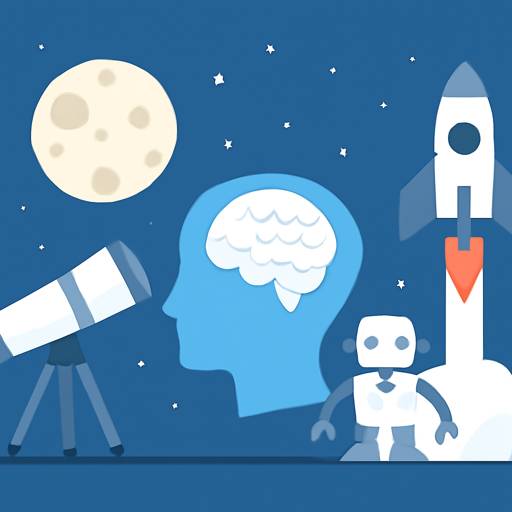
Quality stems from methodological rigor. Preregistration clarifies predictions and analysis plans; randomization, counterbalancing, and sufficient power reduce bias; and transparent reporting of effect sizes and confidence intervals strengthens credibility. Students should prioritize informed consent, anonymization, and secure storage when collecting human data, even for minimal-risk tasks. Cross-cultural comparisons, learning curves across practice sessions, or individual differences (e.g., bilingual advantages in task switching) can enrich findings, provided confounds are controlled. For students intrigued by computational lenses, simple reinforcement learning models can simulate human choice under uncertainty, while drift-diffusion modeling links speed–accuracy trade-offs to latent cognitive parameters.
Bridging psychology and technology opens creative pathways. Eye-tracking with webcam-based estimators can approximate gaze patterns in reading or search tasks; keystroke dynamics can probe motor planning; and smartphone sensors can passively capture context (time-of-day effects on memory consolidation). Exploratory projects might test cognitive load impacts on interface usability, aligning with human–computer interaction principles. Ambitious teams can attempt miniature EEG studies with educational headsets to explore event-related potentials in oddball paradigms—so long as claims are modest and methods are carefully validated. The best student work triangulates results with theory, acknowledges limitations such as sample size or device precision, and proposes next steps that elevate questions from classroom exercises to publishable science.
From Gaits to Swarms: Humanoid and Collective Robotics as Real-World Engineering Labs
Building robots that walk, see, and decide transforms abstract STEM into embodied problem-solving. For humanoid robotics for students, modular biped kits with hobby servos, IMUs, and foot sensors create an approachable gateway into kinematics, dynamics, and control. Learners can implement inverse kinematics for foot placement, tune PID loops for balance, and study center-of-mass and zero-moment-point constraints during gait cycles. Fall detection via accelerometer spikes, compliant ankle strategies, and trajectory planning in joint space bring physics and linear algebra to life. Adding a camera invites computer vision: color segmentation to track markers, optical flow for stabilization, or ArUco-based localization for navigation. A milestone challenge—pick-and-place on a table or climbing a small step—drives iterative design, from 3D-printed brackets that reduce backlash to firmware optimizations that synchronize servo timing.
Collective systems multiply the learning. Coordinating fleets of tiny ground robots or microdrones introduces decentralized algorithms, wireless networking, and robustness-by-design. Students can prototype foraging and dispersion behaviors with finite-state machines, then graduate to formation control (lines, circles, V-shapes) via consensus algorithms and relative localization. Boids-style rules—separation, alignment, cohesion—teach emergent phenomena; potential fields and barrier certificates enable safe multi-agent navigation. Simulators like Webots, CoppeliaSim, and Gazebo accelerate iteration before moving onto microcontrollers (ESP32, micro:bit) with BLE or mesh radios. ROS 2 with micro-ROS helps standardize message passing and logging, while onboard sensor fusion (IMU + wheel odometry + UWB anchors) improves pose estimates critical for coordination.
Case studies clarify impact. A student team programmed a 10-robot ground swarm to map a gymnasium by partitioning the floor into cells and sharing occupancy grids; resilience tests showed graceful degradation when radios dropped packets. Another group trained a biped to traverse uneven foam tiles, using an online footstep planner and touch sensors to adapt stride length. Schools expanding into aerial swarms have staged indoor “light shows” that double as lessons in trajectory optimization and collision cones. Program frameworks like Swarm robotics student projects can connect learners with mentors, parts lists, and safety protocols that fast-track results. Pairing mechanical builds with data disciplines—version control for firmware, A/B testing of gaits, and telemetry dashboards—yields engineering portfolios that mirror industry practice. When combined with thoughtful ethics (privacy in camera-equipped robots, safe operating envelopes, and fail-safes), student robotic ecosystems become living labs where theory meets constraint, and creativity meets verification.


 Isabella Mendoza